
Long story short, this is how I’ve stayed sane, healthy, and
am coping with copious amounts of pain.
1.First I’ve memorized this poem/saying and say it to myself a
hundred times a day:
“God grant me the serenity to accept the thing I cannot
change, the courage to change the things I can and the wisdom to know the
difference.”
2. I stretch every single day, no matter what. Whether you feel like crap, or your body is
going to break; or you have twenty places to be at one time. First things first. You
stop, and get your stretch on. Stretching for people with Dysautonomia, MS, Parkinson’s,
or people who just get leg cramps is extremely important. I can tell a huge
difference between my days I stretch and those I don’t. I stretch consistently throughout
the day. In the morning when I first wake up I go through each position. Then throughout
the day when I get a moment to myself I do quick little stretches as much as
possible. My main stretches all come
from this fabulous book called (bellow)

Stretching and Toning by Melissa Cosby
I love it because it’s spiral so it lays flat. It has instructions
for several fitness levels so if my legs just won’t move like they should one
day I can revert back to beginners and on my good days I can go to Advanced. I’m
forgetful and ADD so I love that it goes into detail for each stretch but then
in the back there’s a page that sums them all up. This way you can go back and
make sure you haven’t forgotten how to do the stretches correctly and make sure
you haven’t formed bad habits.
3.Exercise daily, no matter what. I see those eyes rolling. I know this is a hard one but here’s the thing. Even people with the most limited movements can find an exercise
for them. For years I was told not to exercise because I would pass out. Then I
was told to do it for three min at a time. And here’s what I’ve found. There’s
this hilarious old lady that comes on PBS every morning at 9:00. She sits in
her chair and exercises. Sure you feel dumber then a playboy playmate at a Mensa
conference but it does the trick. Also I have this awesome machine. It’s like a
bike but you can stay on your couch and pedal, and then you can lift it up on
your table and work on your arms. It’s fantastic.

I found mine at Walmart.com
4. I’m now a yogi. I do Yin Yoga almost daily. I should do it
every day several times a day, but I don’t.
Don’t give me that look! I know it may sound crazy but if you really
give into it and your body can heal itself between bad days. It’s amazing! Plus
for the hours right after each session you’ll be standing up straighter then
the Eiffel tower! Here are my favorite videos:
Yes I know they seem stoned...but doesn't that make it more fun?!
5. Learn to meditate. There are hundreds of methods out there,
find one that’s right for you. I have a few favorites look HERE
6. On your bad days get out of bed! Even if you can’t move,
your joints are killing you, and each vertebra of your spine screams out in a
pop as you move upward. You got to continue to move your location. For
instance, in the morning, move from your bed, to the couch. If you need to keep
your favorite pillow and blanket, but just make sure you get out of bed. Then a
few hours later move from the upstairs tv room, to the family room. It’s
amazing how much better you’ll feel on those bad days if you push yourself to
change your surroundings even if it is just from one room to another.
7. Try to get your mind off your pain while excersizing and
getting ready. The reason why it is so hard to be motivated in the morning is
you are dreading that pain. So instead of watching your favorite tv show while
on your butt at night. TVo it or watch it on hulu as you are getting ready for
the day and doing your stretches. I always have whatever show I love on while I
stretch and I watch my horrible guilty pleasure, TMZ (you can get the episodes
on their website) while I do my hair/makeup/and get dressed. It distracts me
from how much it hurts to do those tasks.
8. Find your outlet. You have to find things you can do every
day besides watching tv, no matter how you are feeling. Make sure these are
things you love to do and make you happy. Here are some of mine:
- My music. It’s amazing how much music can uplift you and get you motivated. On days I don’t think I can do my stretches or go on a walk my music usually does the trick to at least get me motivated to walk to the mailbox and back!
- My “Happy journal.” I keep a journal of things that makes me happy. It’s an 8x8 scrapbook of random things that make me smile. Scrap-booking and just looking at my scrapbooks can put me in a great place. If you don’t have the money or movement in your hands to scrapbook an easier and cheaper way to go is Costco’s online photo books. There are other websites that do great scrapbook pages but Costco’s photo books and scrap-booking pages come out to costing less than if you were to print out each of the pictures individually.
- Then I keep a normal everyday journal but I do more doodling then writing.
- I send postcards to my friends. Letter writing is such an important lost art I think. So I write letters and postcards. It’s also a good practice to keep you grateful. Writing thank you notes and love notes to your friends and family really helps you focus on why you should keep fighting through the pain.
- On my good days I do photography so that on my bad days I can sit in bed or on the couch and have fun photoshopping them.
- I’m not a big fan of facebook, but I’m obsessed with this website called polyvore.com. It’s so fun! Basically you make little fashion sets. Sounds stupid I know but it’s my guilty pleasure.
- Some other Ideas are reading, blogging, painting, crochet or needle point, puzzles, brainteasers, soduku, playing card/dice/domino games with family or friends, cook, etc.
9. Get out and volunteer. As of right now I can’t work. My days
are too sporadic and unpredictable so there’s no way I can hold a steady job.
So I volunteer at a Women’s shelter a couple days a week for a few hours, and
thankfully they are flexible when I have bad days. It’s perfect because for the
most part I sit, but I’m still challenged to get up and help out the girls.
Some days I’m on my feet the whole time. It’s hard but it’s good to push myself.
Everyone there knows of my limits so if I say “that’s too much” it’s no
problem. And since it’s volunteer work they are just grateful I’m there no
matter what. I’m sure retirement homes, shelters, schools, and programs for
persons with disabilities would be more than happy to have you.
10. If you know you can find a job that fits with your body and
abilities go for it.Look for jobs you normally wouldn't, telephone operator, florist, receptionist. Even if you are worried that they will be put off by your
illness. Even if they are at least you tried, but I think you would be surprised
by how understanding some employers can be.
11. My next piece of advice may turn you off but it’s really
important you take it. Get yourself a councilor/therapist/shrink! I will go into the importance of one in a
later post, but for now look for someone
who specializes in chronic illness or disease. My therapist isn’t there just to
listen to my problems, but teaches me ways and gives ideas to improve on my quality of
life. It is also very, very important that you have someone unbiased who you
can really confide in when you have an illness, because they understand all 360
degrees of what it’s like to have an illness, be a caregiver to someone who has
an illness and be a provider or physician to someone with an illness. It may take trying out a couple of specialists
to find one who fits your personality and what you are looking for but once you
find it they can really be a great asset in your life.
If you can’t tell, I love my therapist She’s fun and sassy
and reminds me of a high school guidance counselor. Her purpose is to make me
realize if my health isn’t going to change then I have to. She gives me ideas
on how to improve my life. I’ll let you in on a secret; most of the ideas on
this list were hers.
Which leads to my next word of advice...
12. Read this book:
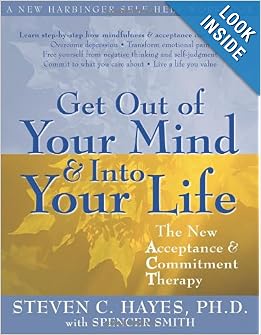
I have read my share of self-help books, to spiritual books,
trying to find the best way to edify myself. Other than the Holy Scriptures I
can one hundred percent say, for me this is the best book for self-edification.
It’s geared for people with high anxiety, but it works with
people with illness too. For instance it teaches you to take those bad thoughts
you have about yourself and turn them from a feeling into an object that you
can analyze. In doing this you realize what a silly thought, why am I thinking
that. And then you can take your forefinger and thumb and flick them away. I
now view my pain this way. I view it as an object instead of a feeling and
though it’s not so easy to flick it away, pain doesn’t have the power over me
that it used to.
It also teaches you meditation. Something I have been
practicing for a while and found extremely important in my quality of life. There
are some odd meditation exercises in here but just do the ones you find are
good for you. I will also do a post on
my favorite forms of meditation, so look for that.
I’ll be honest It’s a heavy read, and you’ll want to fish
through it fast. The first five or so chapters are okay to scan through just as
long as you feel like you are getting a grasp of what he’s saying because he is
laying a foundation, but it’s really important to take your time on the rest of
the book.
Don’t be afraid to redesign the little assignments he gives
you to fit your situation.
13. Count and organize your spoons. AKA Energy I will go in a
later post, but basically don’t over do it. If you feel good one day don’t
freak out and run a marathon. Otherwise you’ll crash the rest of the week. Plan
out your week and save energy for tomorrow.
14. Last but not least. Confide in a friend. Don’t be ashamed to
ask for help.
I live with my parents and they know what I go through because
they see it firsthand every day. However my brother, his family and my extended
family not to mention my friends in the past were kept in the dark.
It’s important to open up to them so they know the details
of what you are going through. I hadn't really told my grandparents exactly how
bad things had gotten, and they got a rude awakening when I was left needing
their assistance to help me to the bathroom. These two were in their late
seventies and had to basically carry me to the bathroom because I couldn't move
the right side of my body. I’ll spare
you the rest of the details but it’s one of my more awful memories. If I had
been honest with them and had a conversation on how they could help me I don’t
think it would have really traumatized me as much.
I usually don’t talk about my illness with my friends much either,
it just doesn't come up. I won’t let it. Even if I’m on the couch slumped over
in pain we talk about anything else.
However, I've learned I need to give up my pride every now
and then and talk about it. Usually we laugh about the silly things that happen
because I can’t make it to the bathroom in time or fall over because my legs
give out or how I threw up on my dad in the Mexican restaurant parking lot. But
we laugh about it because that’s how we have decided to view it. Not as sad
events, but we force ourselves to see the humor in it. So instead of, “oh (frown) It’s so sad you
peed your pants, and then your dog peed on you.” (Tear.) It’s “Oh my gosh! That is so freaking funny I’m going to pee my
pants right now thinking about it!” (Hyperventilating)

Thank you SO much, it's good to know i'm not the only one!
ReplyDelete